Blogs
Smarter Banking: How AI and Automation Turn Data Into Audit Insights

Banking operations teams often face a familiar challenge during an audit: customer records sit across multiple systems, transaction data needs to be checked against business rules, and exceptions require supporting evidence before they can be reviewed. What should be a structured review can quickly turn into a time-consuming process of reconciling spreadsheets, tracing discrepancies, and validating information across systems.
The challenge is not simply the volume of data. It is connecting that data to the rules, evidence, and workflows teams need to investigate issues and make informed decisions. When these elements remain disconnected, reporting becomes harder to validate, exception handling slows down, and audit trails become more difficult to maintain.
Data engineering, workflow automation, and AI can help bring these activities together. Reliable data pipelines provide a consistent foundation for analysis, automation coordinates repetitive tasks and exception routing, and AI can help analysts interpret information and investigate discrepancies. With appropriate validation and human oversight, these capabilities can make banking operations more traceable, efficient, and controlled.
This is what smarter banking looks like in practice: connecting data, intelligence, and execution to improve how operational work gets done.
| What Smarter Banking Means for Modern Financial Institutions
Smarter banking combines digital engineering, data analytics, AI, and automation to connect information across systems, support informed decisions, and move operations from manual data collection towards controlled execution.
For banking leaders, the opportunity lies in connecting dashboards, AI models, and automated tasks across the end-to-end workflow rather than improving isolated activities.
A practical smarter banking approach rests on three connected foundations:
- Trusted data: Information from banking systems is integrated, validated, and structured for reliable use.
- Governed intelligence: AI helps interpret information and identify patterns within defined permissions and business rules.
- Controlled execution: Automation coordinates tasks, routes exceptions, and maintains records of evidence and approvals.
Together, these foundations support use cases ranging from digital onboarding and Know Your Customer (KYC) to audit management, revenue assurance, reconciliation, and regulatory reporting.
WalkingTree Technologies brings together digital product engineering, data engineering, AI, and workflow automation to build solutions around these operational requirements. Our banking technology solutions address both customer-facing digital services and internal banking processes.
| Why Smarter Banking Starts With Data Engineering
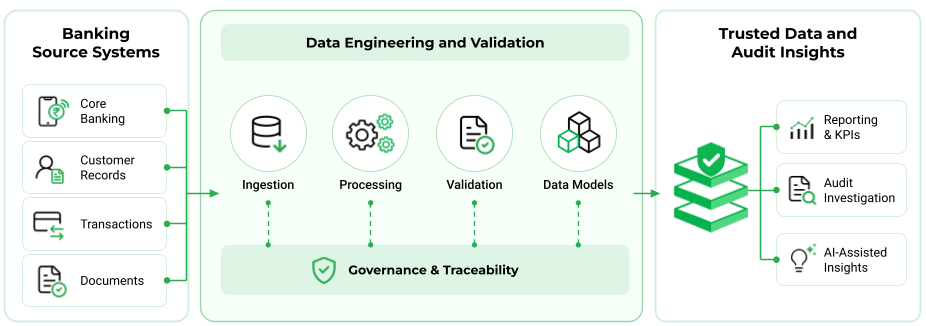
Banking data is often distributed across core banking applications, customer relationship management platforms, document repositories, payment systems, and reporting tools. Inconsistent records and business rules make reporting harder to validate and reduce the reliability of downstream analytics and AI.
| Banking Data Analytics for Better Operational Decisions
Data engineering brings information from different sources into structured, usable datasets through extraction, transformation and loading (ETL) pipelines, validation rules, reusable data models, and governance controls.
Banking data analytics builds on this foundation to support key performance indicators (KPIs), operational reporting, trend analysis, and investigation.
Consider a revenue assurance team reviewing potential discrepancies between transaction records, product rules, and financial reports. A reusable data model can standardize calculations and help analysts trace reported figures back to their sources. This reduces dependence on disconnected spreadsheets and makes the investigation process easier to repeat and review.
WalkingTree Technologies’ Data Engineering and Analytics services support data integration, pipelines, analytics, and AI-ready data ecosystems.
Our capabilities across Microsoft Fabric, Azure Databricks, data governance, and unified dashboarding can help banks establish a reliable foundation for reporting, automation, and AI initiatives.
| What Banking Research Means for Technology Leaders
McKinsey’s Global Banking Annual Review 2026 reports that global banking net income reached $1.3 trillion in 2025, up 7% from the previous year. Its review also examines the accelerating pace of AI-driven change across the industry.
For technology leaders, the implication is to connect investment decisions to business priorities. Better data infrastructure is valuable when it enables more reliable reporting, more effective risk analysis, or faster operational workflows. The objective is not to modernize data for its own sake, but to make better business decisions possible.
| Banking Automation: Connecting Workflows Across Systems
Banking automation can streamline repetitive tasks, but its broader value often comes from connecting multiple activities into a controlled workflow.
Consider digital customer onboarding. An application may require document collection, identity verification, information validation, compliance checks, and approval. Automating document extraction alone does not resolve delays caused by missing information, disconnected systems, or manual handoffs between teams.
A connected workflow can validate submitted information, identify missing documents, route cases to the appropriate reviewers, and record each stage of processing. Applications that require additional judgment can remain with authorized employees.
The same approach applies across banking operations.
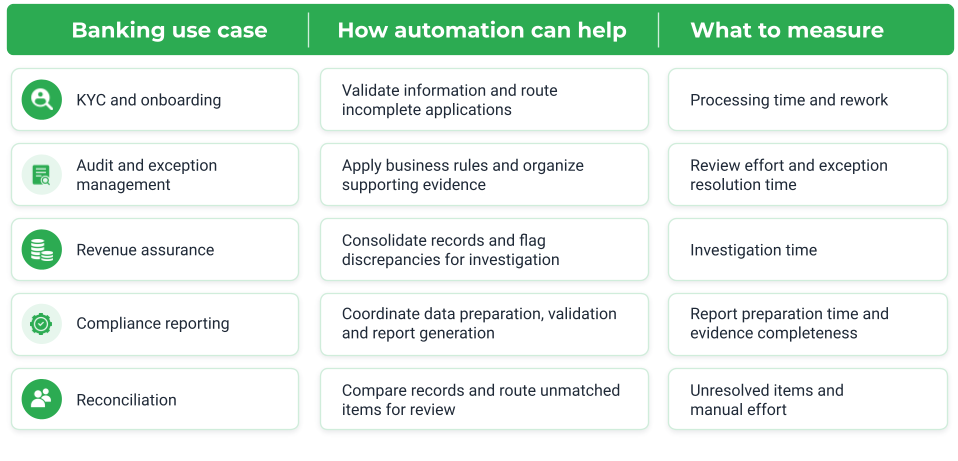
These are potential applications, not guaranteed results. Each bank should establish a baseline and assess the results after implementation.
WalkingTree Technologies’ banking portfolio includes digital onboarding solutions such as FinCue, AI-enabled identity verification through VideoKYC, and workflow capabilities for activities such as document processing, reconciliation, and task management. Its solutions are designed to address operational requirements while supporting integration with existing banking systems.
The engineering priority is to connect the steps that matter, integrate with existing platforms, and ensure that exceptions remain visible rather than disappearing inside an automated process.
| AI in Banking: From Insights to Governed Action
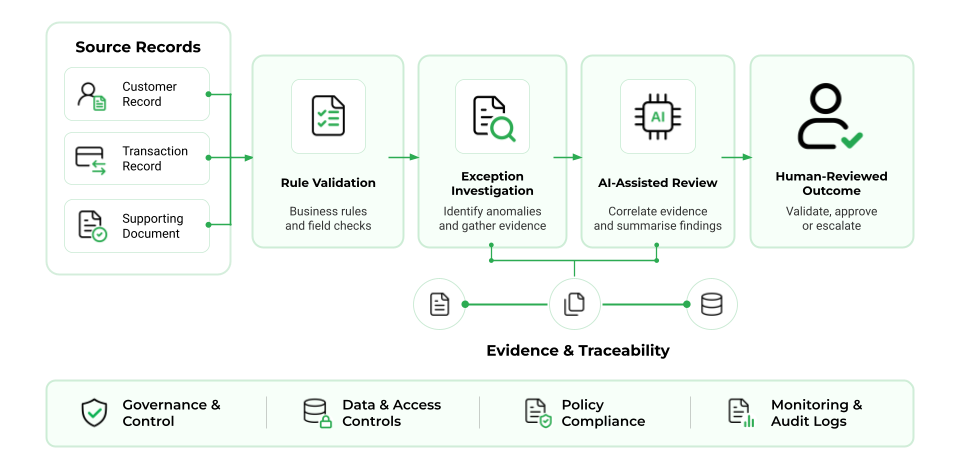
Traditional automation works well when tasks follow known rules. AI can extend these workflows by interpreting documents, summarizing information, identifying patterns, and helping employees interact with enterprise data using natural language.
For example, an audit analyst investigating a flagged customer record could use an AI-assisted interface to retrieve relevant evidence, summarize discrepancies, and identify the business rule associated with an exception. The analyst would still verify the underlying records and determine the appropriate action.
WalkingTree applies AI and data engineering to practical banking workflows, helping financial institutions integrate intelligent capabilities with existing systems and business processes. Applications such as document analysis, audit investigation, and information retrieval can support employees in their work, with implementation guided by data quality, operational risk, and the level of human oversight required.
| Why AI Governance Matters for Smarter Banking
The Bank for International Settlements, in its 2025 executive summary on the financial stability implications of AI, discusses AI adoption across financial services and the associated risks involving data, model governance, third-party dependencies, and oversight.
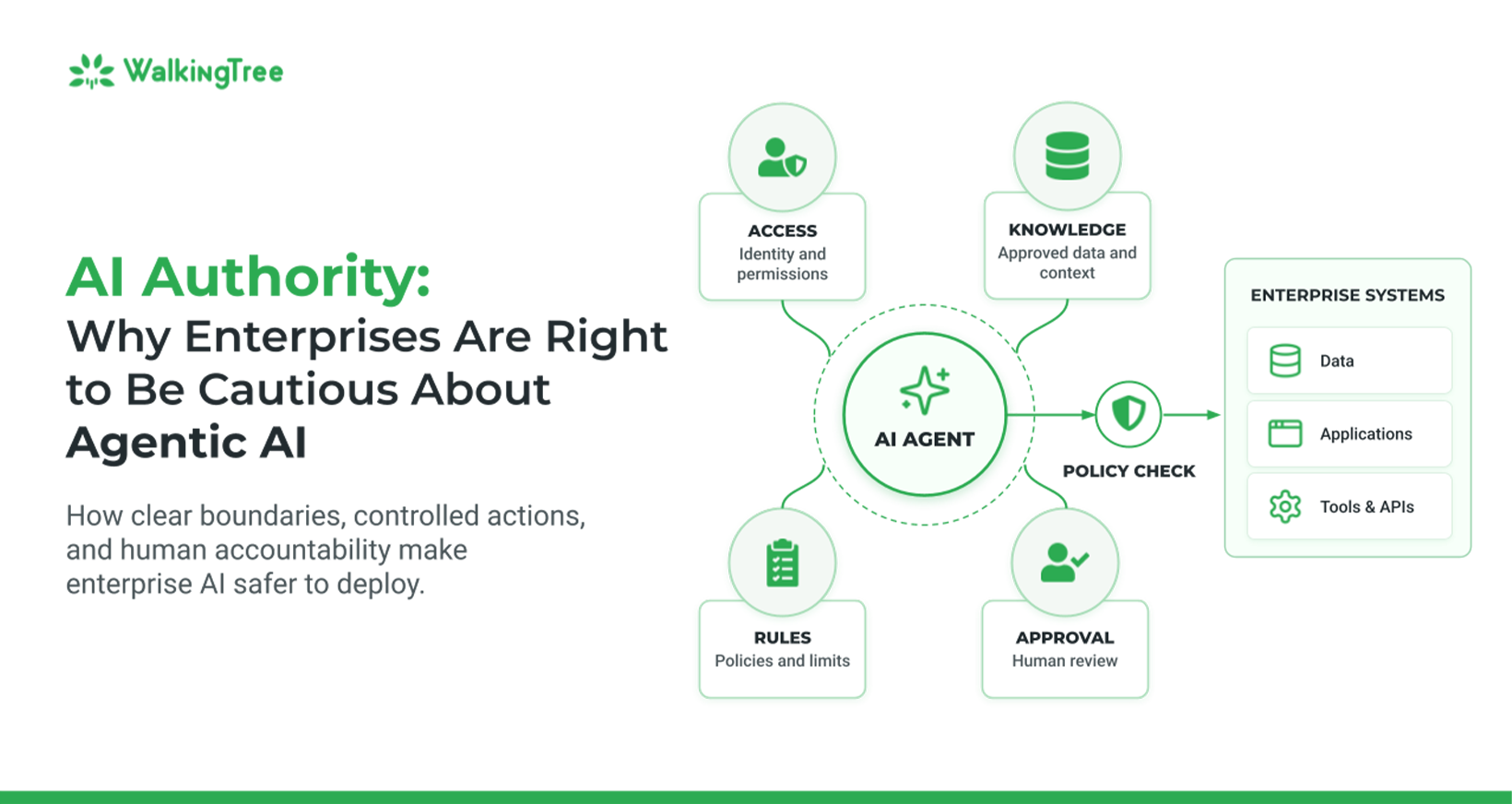
For banking operations, an AI recommendation should not automatically become an authoritative business decision. A governed implementation should establish:
- Data permissions: Which records and systems an AI component can access.
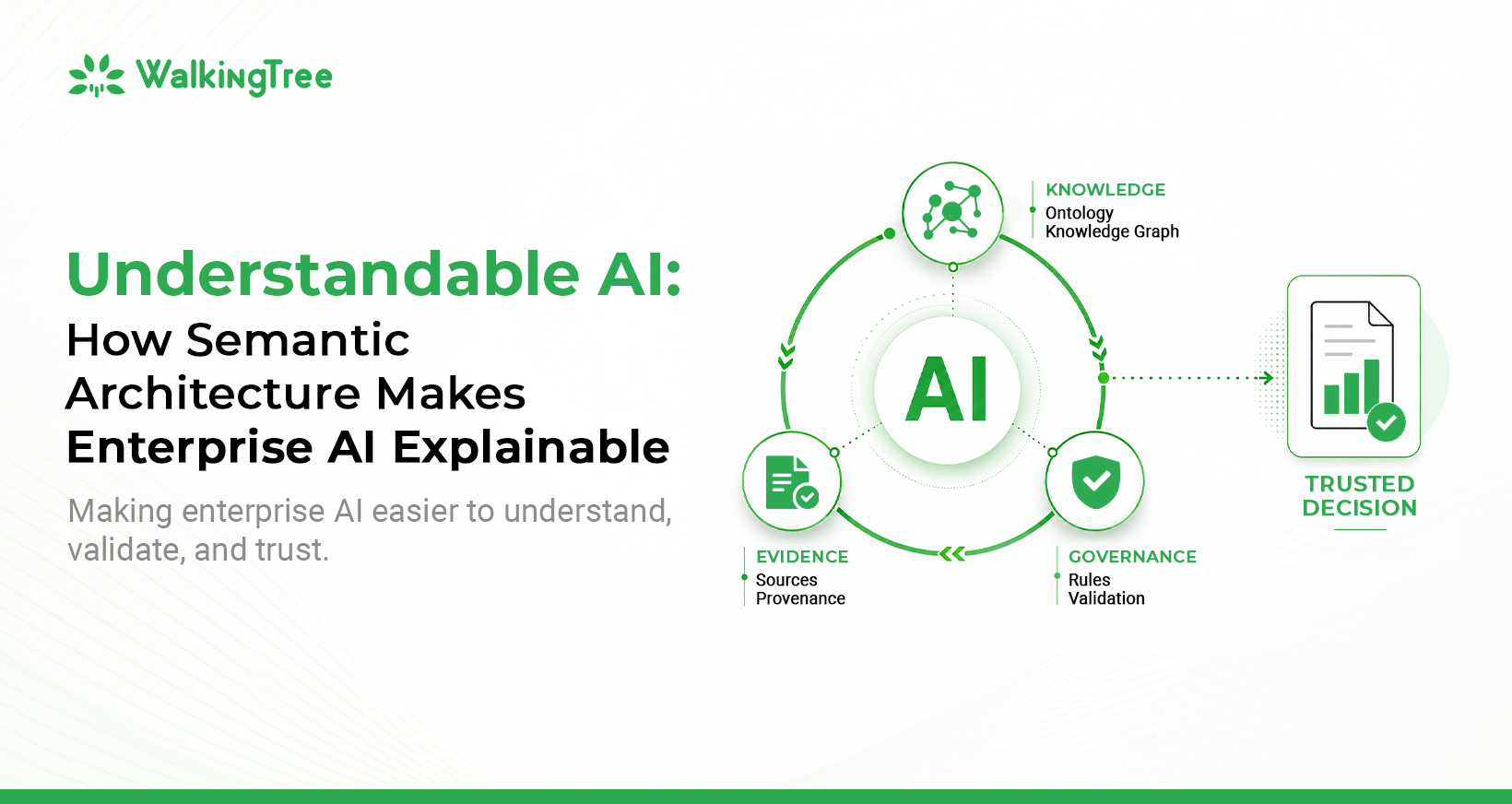
- Evidence traceability: How recommendations connect to source information and applicable rules.
- Validation: Which outputs require deterministic checks or independent verification.
- Approval boundaries: Which actions require authorized human approval.
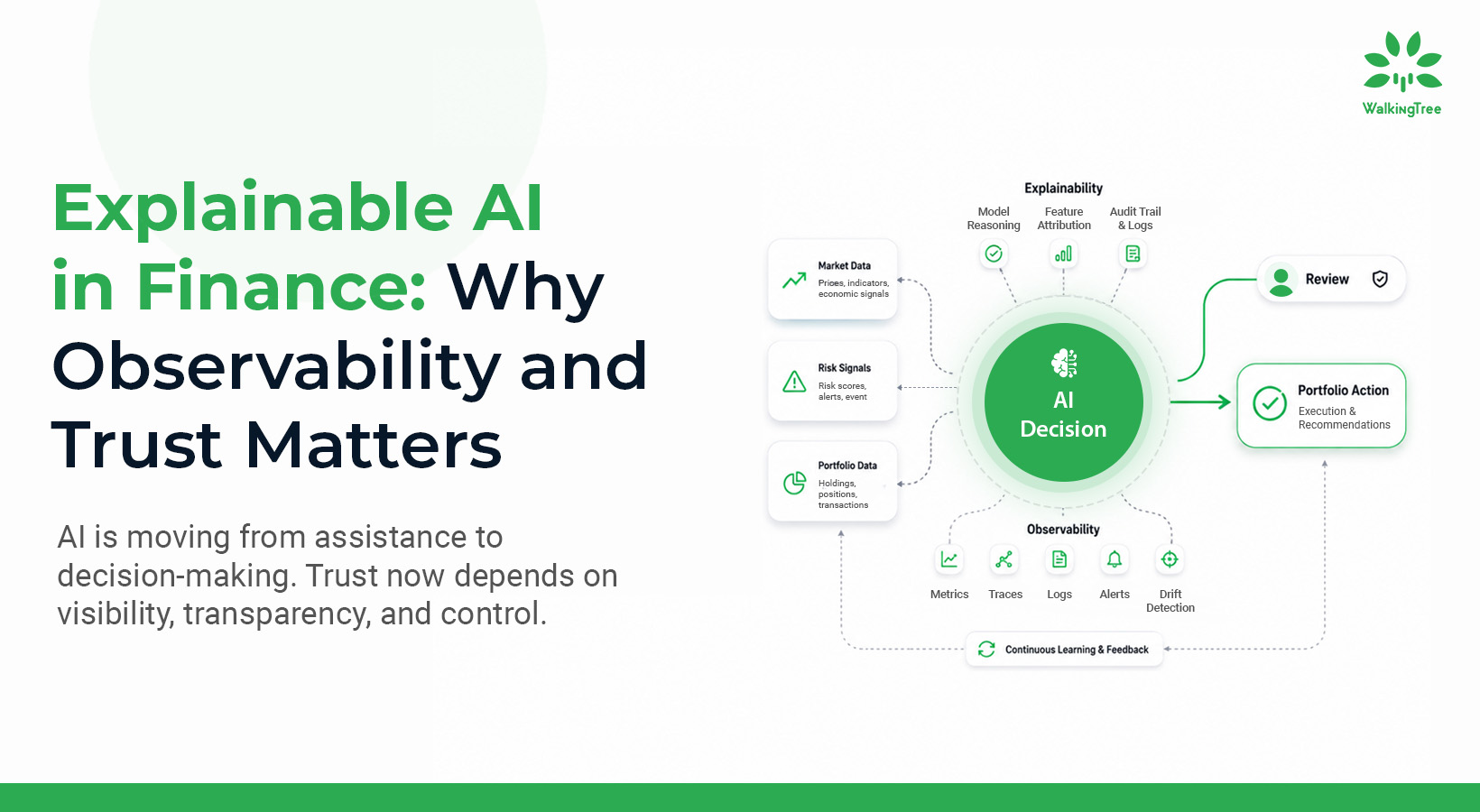
- Monitoring: How errors, performance changes, and operational risks are detected.
For example, an AI component may flag an audit record for further investigation. The workflow can route it to an authorized reviewer, retain the supporting evidence, and record the final decision. This approach combines AI-assisted analysis with appropriate accountability.
The objective is to introduce AI where it adds value, with controls proportionate to the risks involved.
| Smarter Banking in Practice: A UAE Banking Engagement
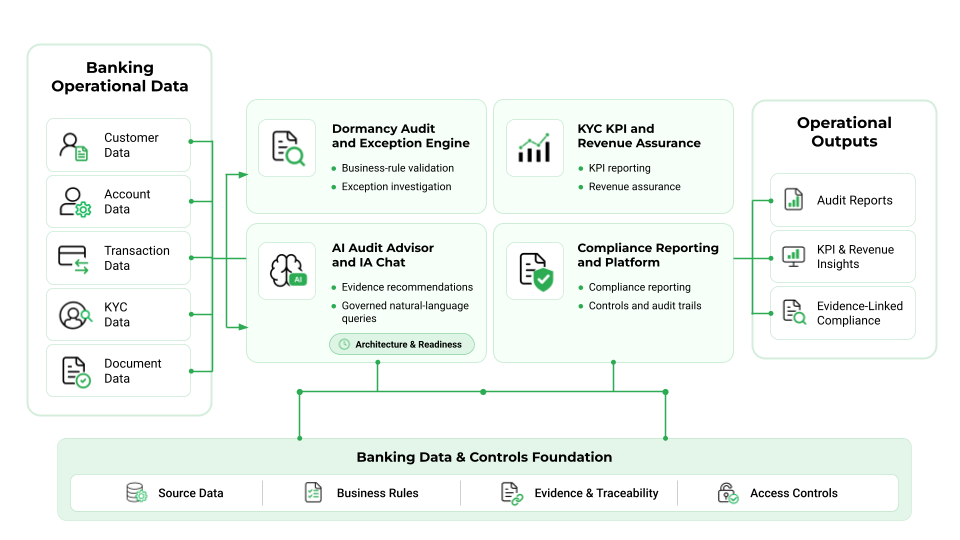
WalkingTree Technologies’ ongoing engagement with a leading bank in the UAE demonstrates how data engineering, analytics, audit workflows, and AI readiness can be brought together around operational needs. The engagement has continued for more than 1.5 years, with a team of 10 engineers supporting connected workstreams.
Rather than treating each requirement as an isolated reporting or automation task, the engagement addresses multiple parts of the banking workflow.
1. Dormancy Audit and Exception Engine
The dormancy audit and exception engine brings together data from source systems, applies business-rule validation, classifies exceptions by severity, and supports evidence drill-down and automated audit reports.
This provides a structured approach to identifying records that require investigation and helping reviewers understand the evidence associated with each exception.
In a UAE run dated 23 April 2026, the dormancy audit processed 10,127 customer records and identified 42,705 exceptions. These figures demonstrate the volume of records processed and exceptions surfaced for review. They should not be interpreted as confirmed violations or resolved cases.
Explore the Bank Case Study
Learn more about the banking engagement, including its dormancy audit and exception engine, data engineering framework, and connected compliance workstreams.
To assess operational impact, the bank can also track audit preparation time, manual review effort, exception resolution time, and evidence completeness against an established baseline.
2. KYC KPI and Revenue Assurance
The KYC KPI and revenue assurance workstream combines data modelling, ETL, KPI logic, and Power BI reporting.
The objective is to establish a reusable audit data framework that can support multiple requirements rather than build isolated reporting processes for every use case. A consistent data foundation can help teams trace reported figures to their underlying records and apply common definitions across related workflows.
3. AI Audit Advisor and IA Chat
The engagement also includes an AI-assisted audit analysis workstream designed around evidence recommendations, field-level traceability, reason codes, and a governed natural-language-to-SQL approach.
This capability remains at the architecture and readiness stage. Its intended design incorporates human approval and audit trails, with the goal of helping analysts investigate records while retaining control over how recommendations are validated and acted upon.
4. Compliance Reporting and Platform
The broader engagement also covers compliance reporting, operational controls, risk assessment, and reporting capabilities supported by embedded Power BI dashboards, PDF and Excel exports, role-based access control (RBAC), and React/TypeScript engineering.
The emphasis is on connecting controls to supporting evidence, tests, findings, and approvals. This supports a more traceable approach to compliance activities and helps establish a consistent foundation for reviewing operational outcomes.
| What This Engagement Demonstrates
The value of the engagement lies in how the workstreams connect. Source data feeds validation, validation identifies exceptions, evidence supports investigation, and authorized reviewers make decisions. Reporting provides visibility across the process, while AI can assist with selected analytical tasks.
This is the practical connection between smarter banking and engineering execution: solutions are designed around how the bank needs to operate, not simply around the introduction of a new technology.
The engagement also illustrates why the maturity of each capability matters. Operational results from the dormancy audit should be distinguished from AI capabilities that are still being prepared for implementation. Clear boundaries make it easier to evaluate progress, manage expectations, and determine what should happen next.
| How to Measure the Value of Smarter Banking
A banking transformation should be evaluated by the operational improvements it delivers, not by the number of tools deployed or tasks automated.
Before implementation, teams should establish a baseline for the process being improved. After deployment, they can assess results using measures such as:
- Processing time: How long does the workflow take from initiation to completion?
- Manual effort: How much employee time is spent gathering information, checking records, or preparing reports?
- Exception handling: How quickly are exceptions reviewed, assigned, and resolved?
- Evidence completeness: What proportion of cases contain the required supporting evidence?
- Quality and rework: How often do errors or missing information require additional work?
- Operational cost: What is the cost per case, report, or completed workflow?
Metrics should reflect the business objective and be reviewed alongside quality, security, and compliance requirements. Faster processing alone is not a successful outcome if it increases errors or weakens controls.
A phased implementation makes this evaluation more practical:
- Identify the use case. Select a banking process with a clear operational challenge and measurable objectives.
- Establish the data foundation. Validate source systems, data quality, business rules, and access requirements.
- Connect and automate the workflow. Integrate repeatable tasks, exception routing, and evidence capture.
- Introduce AI where it adds value. Apply AI to tasks such as document interpretation, investigation support, and natural-language interaction, with appropriate approval controls.
- Measure and expand. Compare outcomes against the baseline before extending the solution to additional processes.
This approach helps banks evaluate transformation through evidence and operational performance rather than technology adoption alone.
| Building Smarter Banking With WalkingTree Technologies
Smarter banking connects the data, systems, and controls behind everyday banking operations. Reliable data foundations, governed AI, and integrated workflows can help banks improve operational visibility while maintaining traceability and accountability.
WalkingTree Technologies combines data engineering, analytics, AI, workflow automation, and digital product engineering to address banking challenges across onboarding, audit management, reporting, and AI-assisted analysis.
The starting point is a clearly defined operational problem with measurable objectives. By connecting existing systems and introducing appropriate automation, banks can evaluate progress against business outcomes, data quality, security, and compliance requirements.
Looking to improve banking operations through data, AI, and automation?
Talk to our experts to discuss your priorities and identify opportunities for measurable operational improvement.