Blogs
Understandable AI: How Semantic Architecture Makes Enterprise AI Explainable

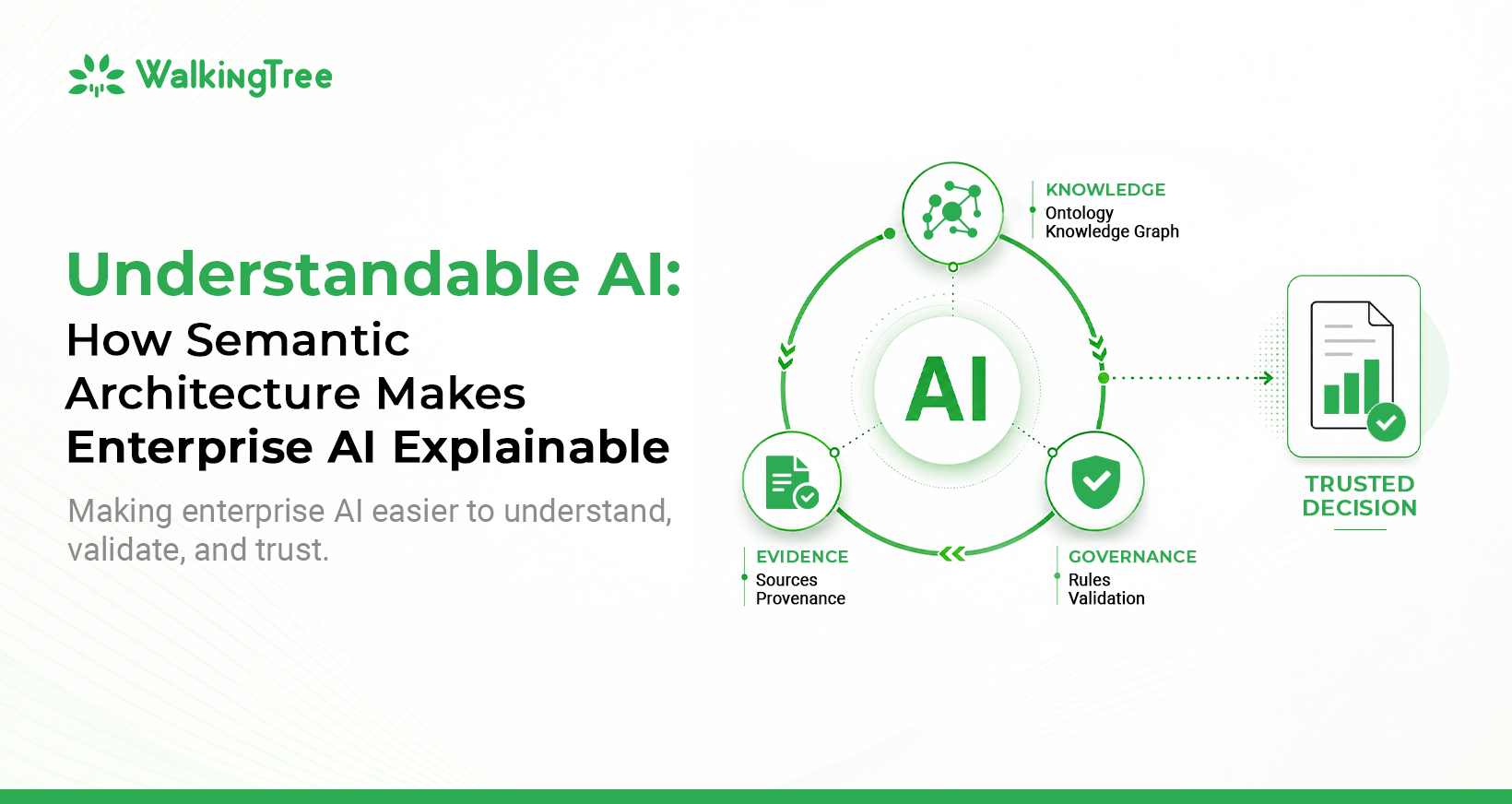
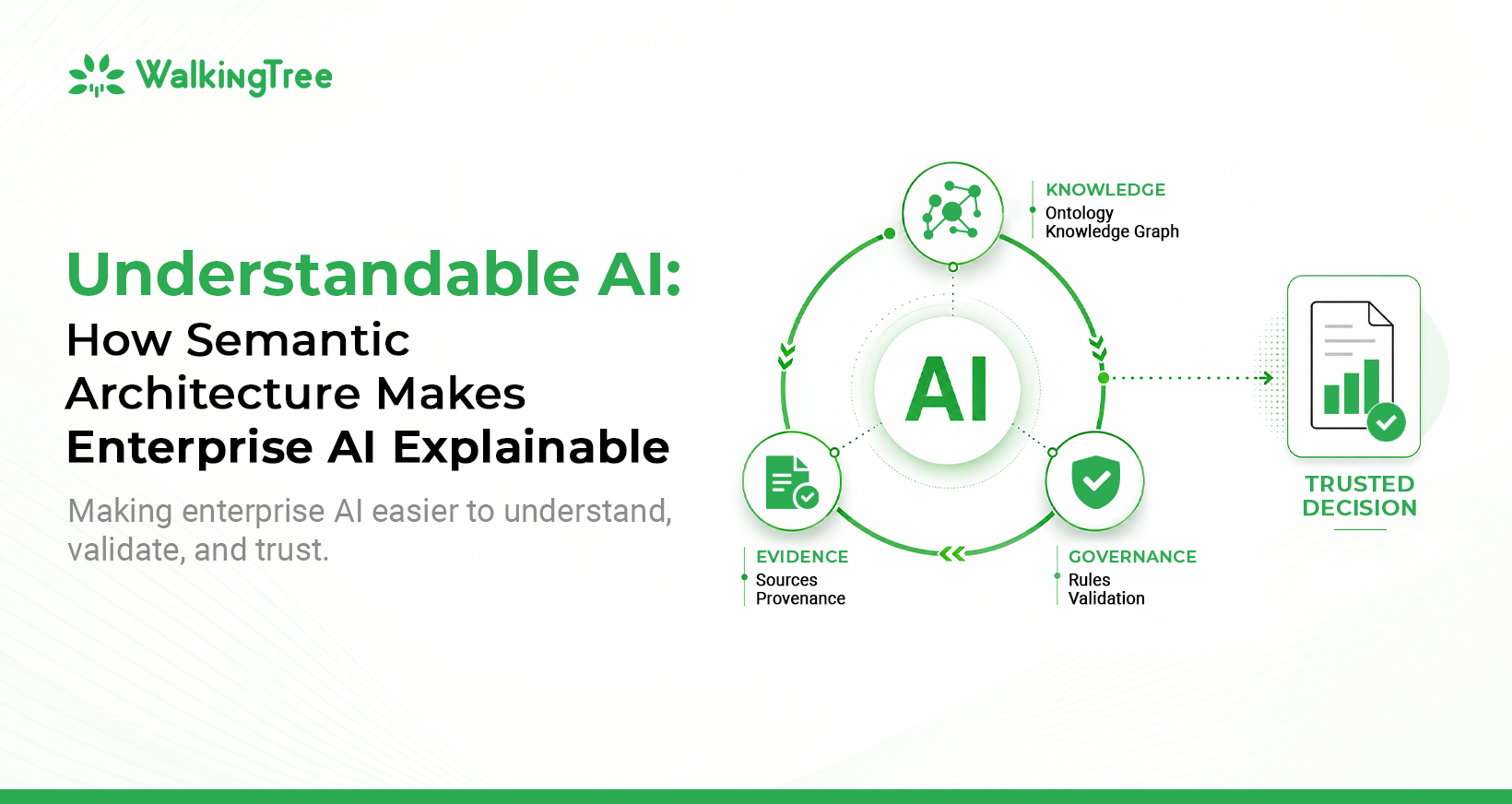 Imagine an enterprise AI assistant reviewing a supplier for a regulated product. It can identify the supplier, find relevant certifications, compare requirements, and recommend whether the supplier should be approved. But before that recommendation becomes a business decision, one question matters: can the organisation understand why the AI reached that conclusion?
This is where Understandable AI becomes essential. Enterprise AI needs more than fluent answers: it needs clear business definitions, relevant context, traceable evidence, validation, and governance around the model. When these elements work together, AI can show not only what it recommends, but also the facts, relationships, rules, and evidence behind that recommendation.
The goal is not to expand the model’s knowledge indefinitely, but to establish the boundaries, context, and rules within which it operates.
That shift from model-centric AI to meaning-centric AI is bringing ontologies, knowledge graphs, structured outputs, validation, and provenance back to the centre of enterprise architecture.
| Why Understandable AI Needs More Than a Model
Generative AI has given organisations software that can interpret, summarise, reason, draft, and converse across almost any domain. But intelligence and control do not arrive in the same package.
A large language model is optimised to produce plausible continuations. An enterprise needs answers that use its definitions, respect its policies, trace their evidence, expose uncertainty, and behave predictably when evidence is missing. Prompt engineering can influence these outcomes, but it cannot provide a durable enterprise contract.
The more useful question is therefore not, “How do we make the model know everything?”
It is:
“How do we define the world in which the model is allowed to operate?”
That shift creates the foundation for understandable AI. The model interprets ambiguity and composes language. The semantic layer supplies identity, context, and constraints. Deterministic software validates and executes. The result is not deterministic AI. It is a controlled system that contains a probabilistic component.
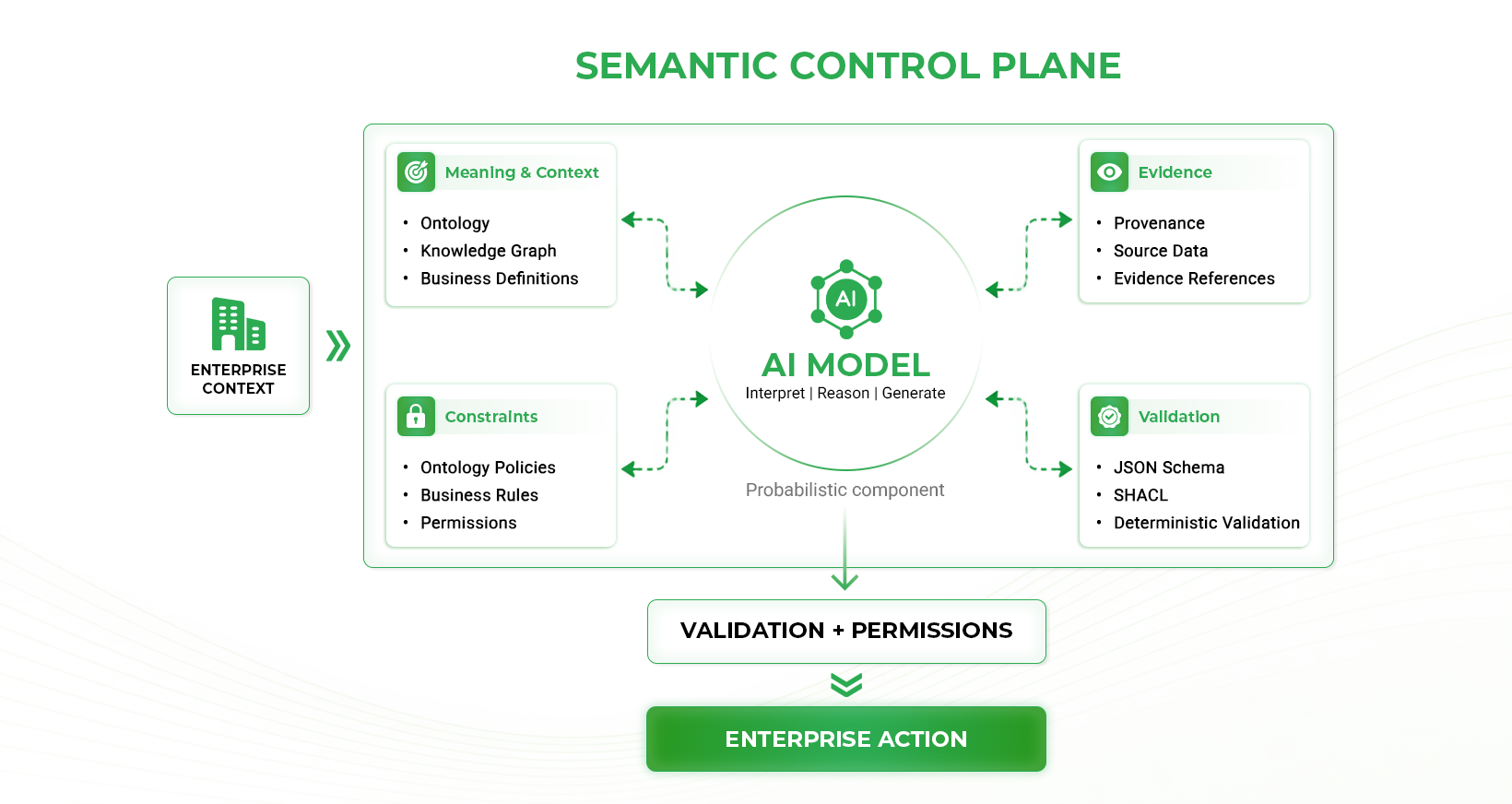
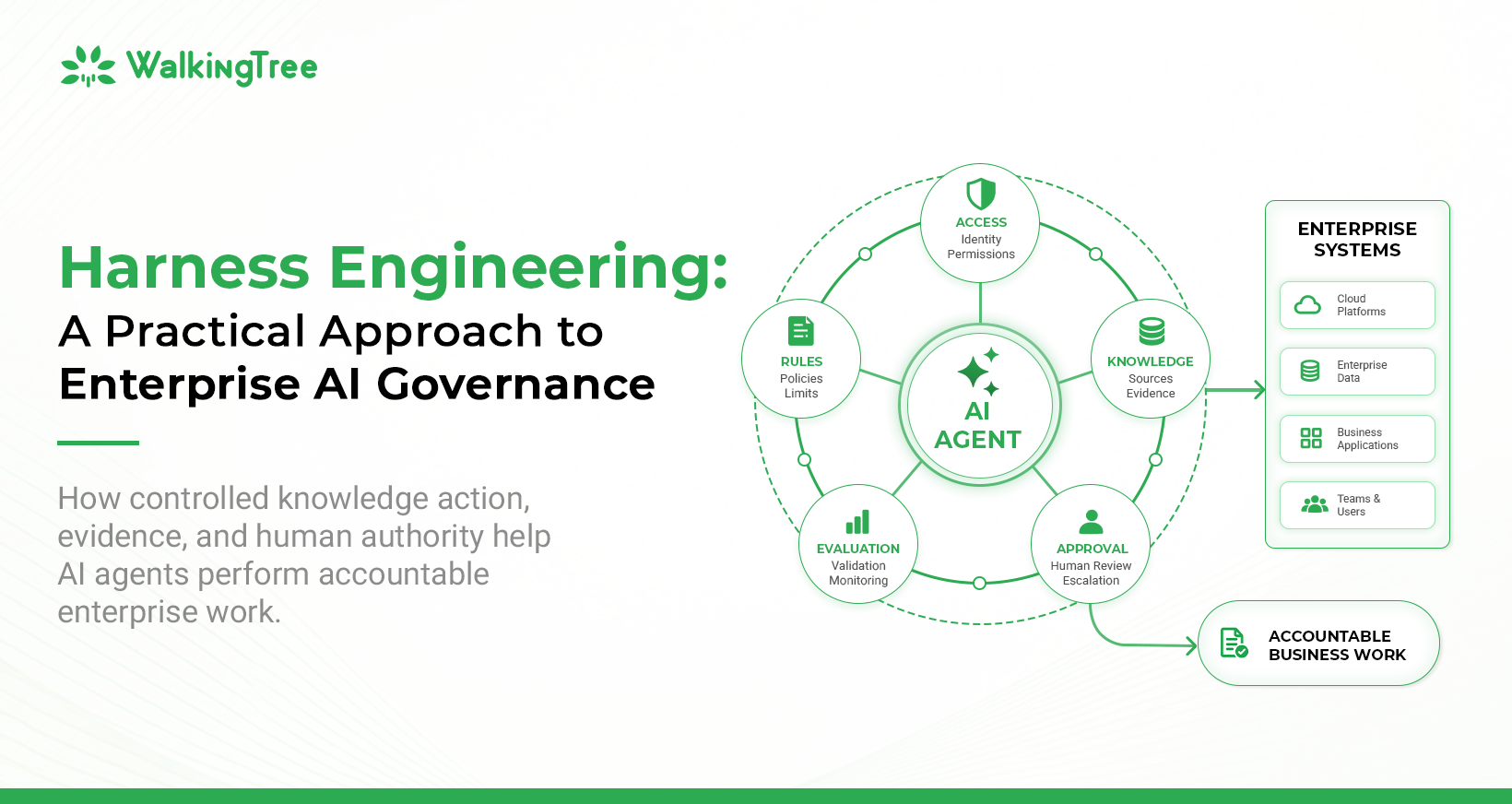
The model therefore operates within a semantic control plane that supplies meaning, evidence, constraints, and validation before enterprise action.
| How Understandable AI Moves Beyond Fluent Answers
Most AI applications begin with unstructured text. Documents are split into chunks, converted into embeddings, and retrieved by similarity. Retrieval-augmented generation, or RAG, is valuable because it gives a model relevant evidence without retraining it.
But similarity is not meaning.
A passage can be linguistically close and still refer to the wrong customer, an obsolete policy, a different jurisdiction, or a product with a confusingly similar name.
This is where semantic structure becomes important.
- A schema specifies the shape of data.
- A taxonomy provides controlled labels and hierarchies.
- An ontology defines concepts, relationships, and rules.
- A knowledge graph instantiates those concepts as connected facts.
- Validation constraints test whether facts and outputs conform.
- Provenance records where a claim came from and how it changed.
Together, these elements form a semantic control plane around the probabilistic model.
These foundations are also becoming more practical to implement through established Semantic Web Standards.
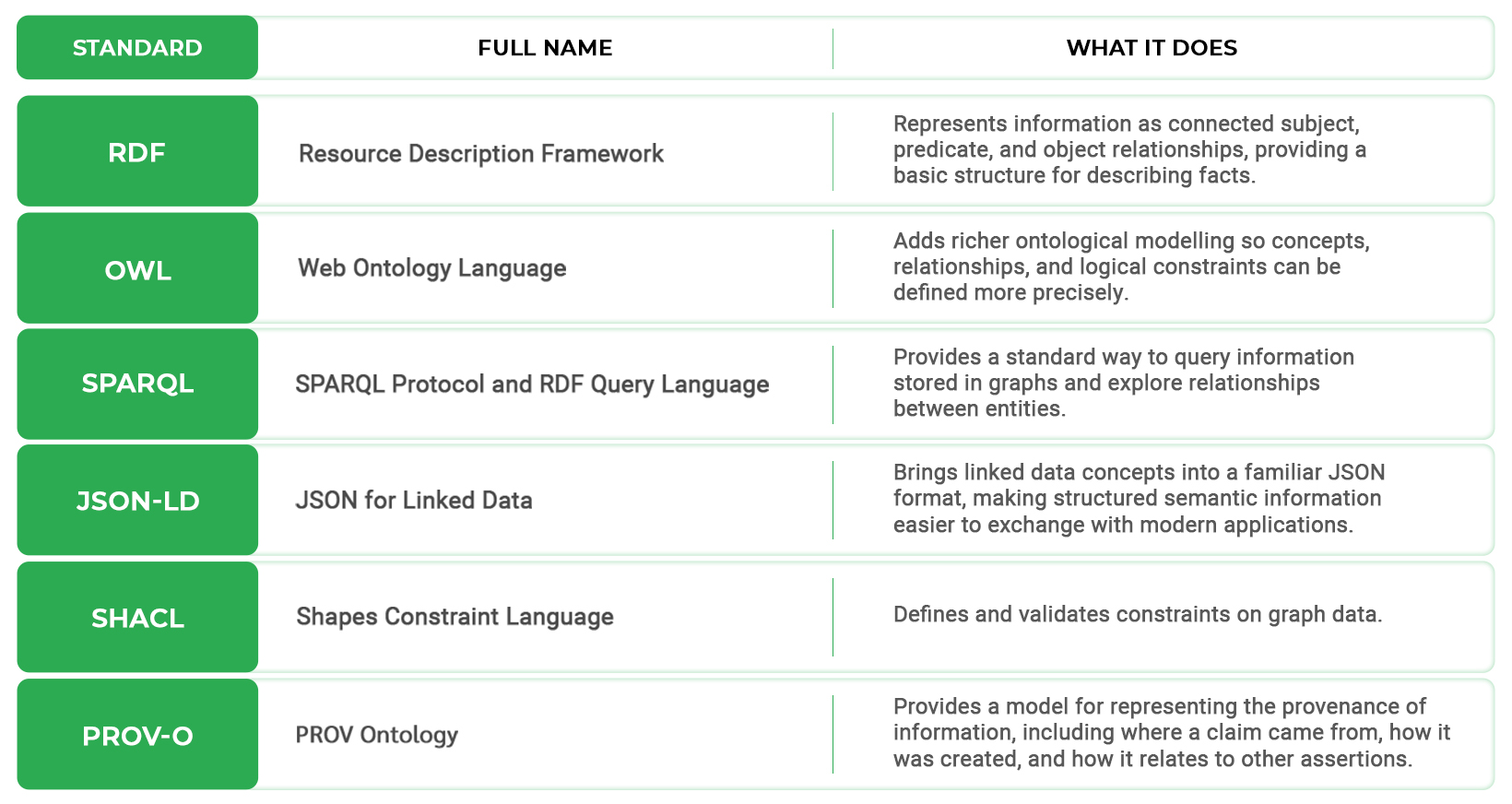
Together, these foundations support the semantic control plane by providing mechanisms for modelling meaning, connecting information, validating it, and preserving evidence. Structured-output capabilities further make it easier to connect generative systems to deterministic validation.
The result is a more explainable enterprise AI architecture because the AI answer can be connected to the meaning, evidence, and rules that shaped it.
| How Semantic Context Makes Understandable AI Enterprise-Ready
Consider an AI assistant asked to approve a supplier for a regulated product.
A user asks:
“Can we approve this supplier for Product X in Germany?”
The model can extract the supplier name and requested material from the request. But extracting words is only the beginning.
- Which legal entity does the supplier name represent?
- Which product identifier is involved?
- Which certification is required?
- Is that certificate current?
- Does it apply to Germany?
- Was it issued by an accepted authority?
- Has the supplier been assessed previously?
The ontology defines what counts as a supplier, material, certification, and approved jurisdiction. The semantic layer connects those definitions to the enterprise context used by the AI system. The knowledge graph connects the supplier to legal entities, certificates, products, jurisdictions, and previous assessments. Policy rules determine whether the evidence satisfies business requirements, while provenance links each fact to its source.
The model can then propose a decision with reasons, evidence identifiers, confidence, and unresolved checks.
Validation can block malformed answers, graph queries can identify missing certificates, and a policy engine can require human approval for high-risk cases.
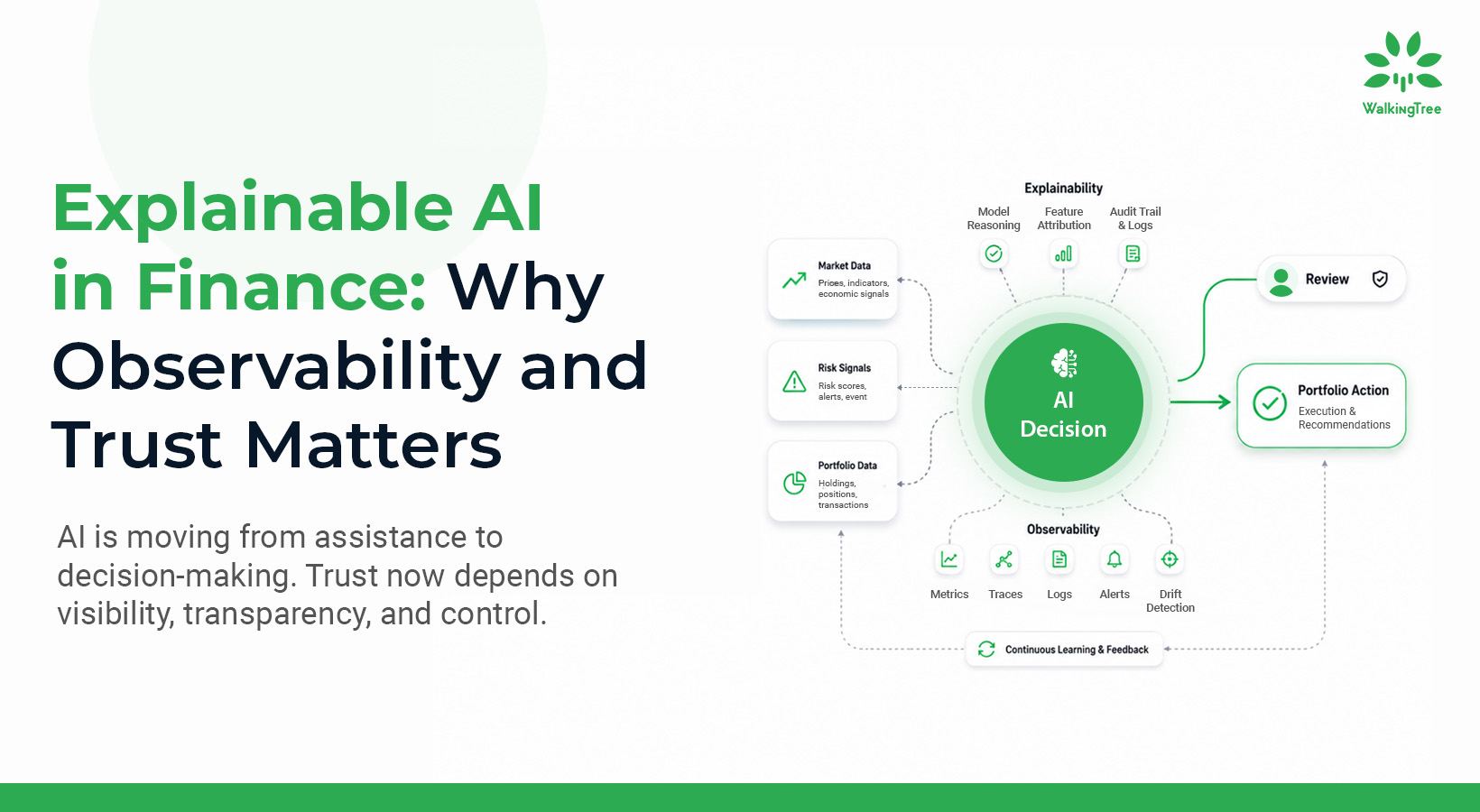
The user receives an explanation whose claims can be traced back to evidence, creating a practical foundation for Explainable AI rather than a polished paragraph that merely sounds right.
| Why Hybrid Retrieval Strengthens Understandable AI
Knowledge graphs and vector retrieval solve different retrieval problems. Vectors locate relevant language, graphs locate connected meaning, and keyword or database queries supply exact matches.
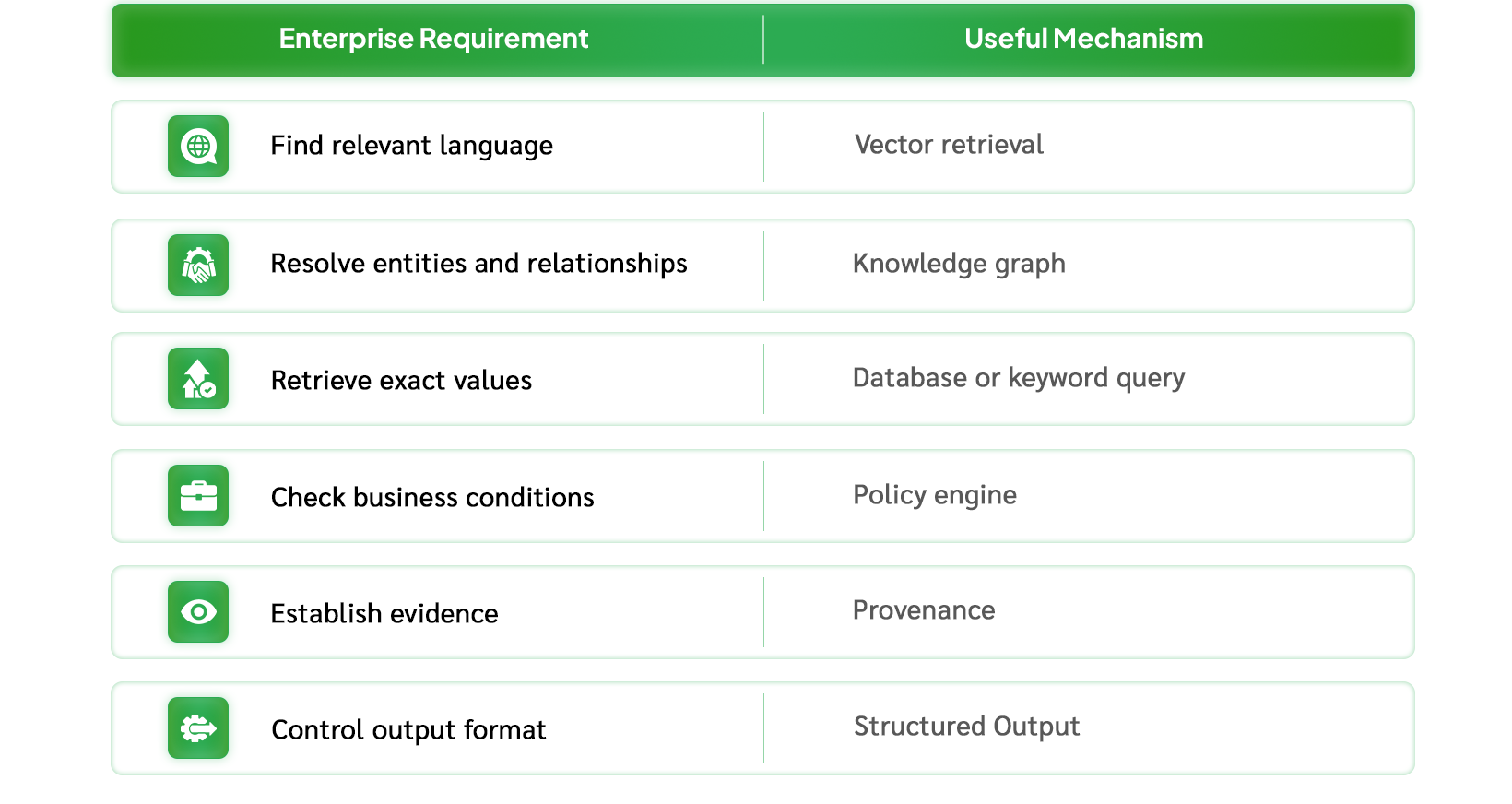
The lesson is not that graphs replace vectors. It is that hybrid retrieval is stronger because each mechanism contributes a different kind of context. GraphRAG extends this approach by combining graph-based context with retrieval and generation.
Microsoft Research’s GraphRAG shows how knowledge-graph-derived structure can help LLMs answer questions that require connecting disparate pieces of information or understanding broader themes across large text collections. Its research also explores local and global question answering using graph-derived structures and summaries. This is particularly useful when a question requires connections, themes, or aggregation across a large corpus rather than retrieval of a single relevant passage.
For example, an enterprise customer-service assistant could use vector retrieval to find relevant support documentation, an exact database query to retrieve the customer’s current account status, and a knowledge graph to connect that customer to contracts, products, service cases, and related entities.
| Five Layers of Control for Understandable AI
A practical architecture for understandable AI can be organised into five reinforcing layers.
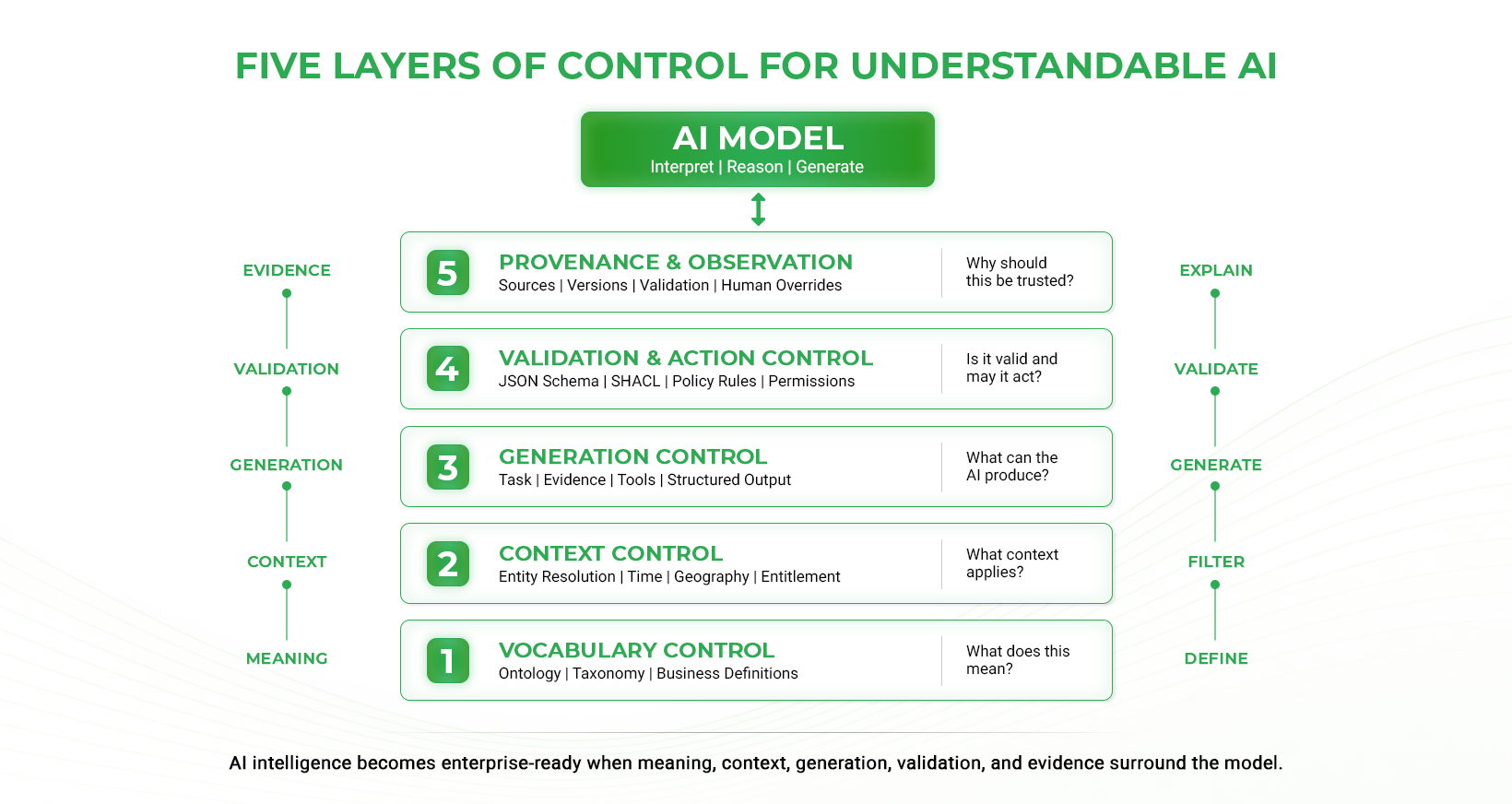
1. Vocabulary Control
Define the business nouns and relationships that matter.
Terms such as Customer, Beneficial Owner, Product, Obligation, Incident, approvedBy, supersedes, and appliesIn should have controlled meanings. Where established vocabularies already exist, reuse them and govern local extensions as shared enterprise interfaces rather than one-off data-cleaning projects.
This creates a shared language that models, applications, data platforms, and business teams can use consistently.
2. Context Control
Resolve entities and retrieve a bounded context relevant to the task.
Apply time, geography, entitlement, and document-status filters before information reaches the model. The objective is not to give it more information, but the right information.
3. Generation Control
Give the model an explicit task, allowed evidence, tool permissions, and an output schema.
Require identifiers and evidence references, not just prose.
Most importantly, treat “insufficient evidence” as a valid result.
An enterprise AI system should be able to say that it cannot support a conclusion when the evidence is incomplete.
4. Validation and Action Control
Validate structure with JSON Schema, graph conformance with SHACL, and business decisions with deterministic policy rules.
Separate read, recommend, and execute permissions.
High-impact actions should pass through an approval boundary outside the model.
Structured Outputs can help make the model interface more reliable by requiring supported outputs to conform to developer-supplied JSON Schemas. But syntax is only the outer shell. A perfectly valid JSON object can still contain the wrong customer, an invented policy, or a semantically impossible date. Schema validity must therefore be combined with domain semantics, evidence checks, and deterministic validation. OpenAI notes that Structured Outputs can still allow mistakes within the values of the generated object.
5. Provenance and Observation
Record sources, graph versions, ontology versions, model versions, prompt or policy versions, validation results, and human overrides.
Measure semantic failure modes such as:
- Wrong entity
- Stale fact
- Unsupported claim
- Policy violation
- Missing evidence
These measures are often more meaningful for enterprise AI governance than latency and token cost alone.
| From AI-Generated Knowledge to Trusted Enterprise Knowledge
Language models are increasingly being used to extract entities and relationships from documents. This accelerates knowledge-graph construction, but it also creates a critical AI governance challenge. Extraction output is a hypothesis, not ground truth. Without lineage, confidence, validation, and review, an incorrect inference can become a durable organisational fact that future AI systems retrieve as trusted information.
A safer knowledge lifecycle moves from source evidence through AI extraction, validation, provenance, and human review before knowledge becomes trusted.
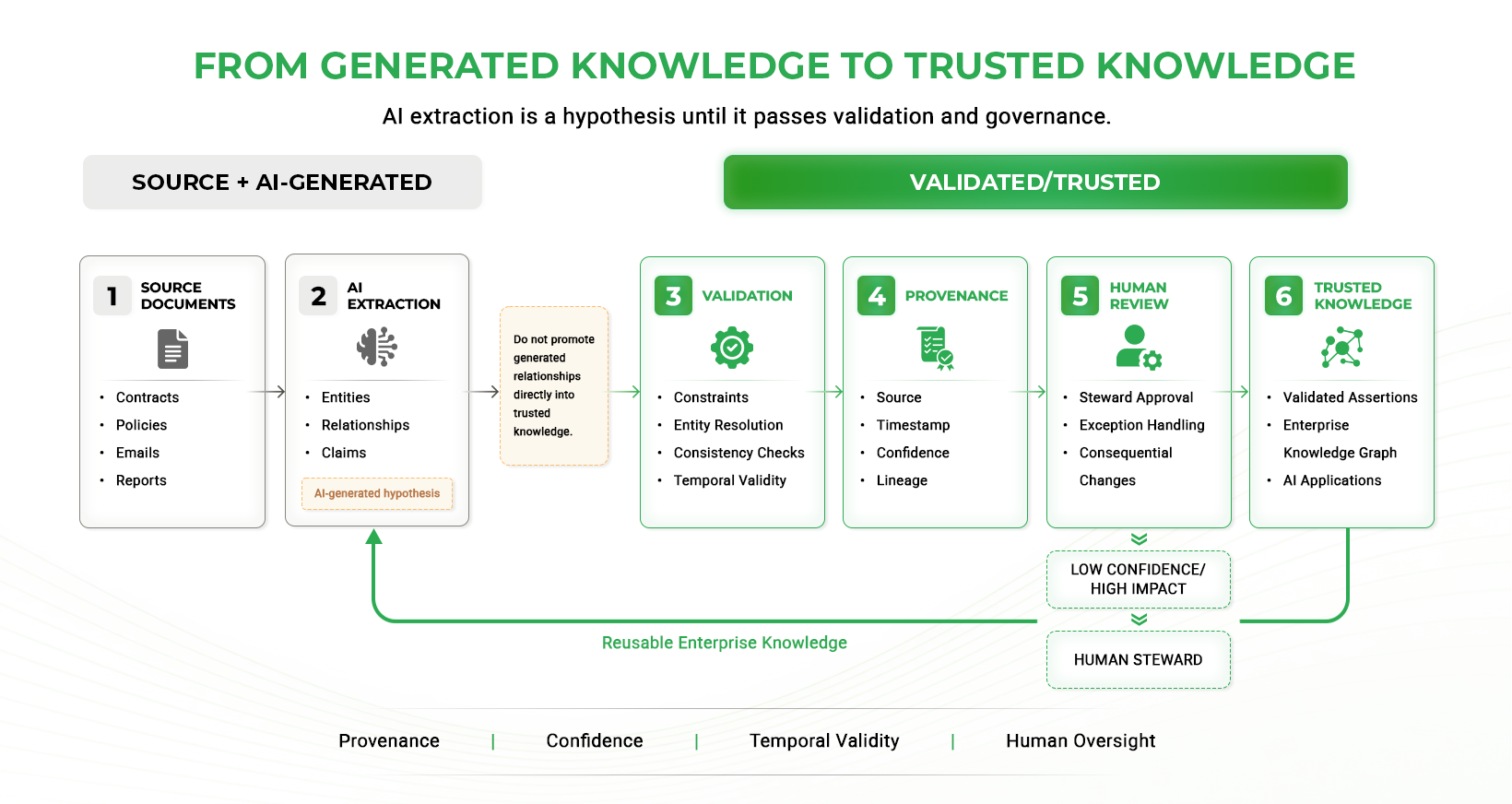
Source assertions should remain distinguishable from inferred claims. Provenance and temporal validity should remain attached. Consequential or low-confidence changes should be routed to human stewards. Only validated assertions should be promoted into trusted graph layers.
The graph should make uncertainty visible rather than hiding it.
| Start With a Decision, Not an Enterprise Ontology
The common failure mode is to begin with a grand, company-wide ontology and spend months debating definitions before creating value.
Start instead with one consequential decision or workflow.
This could be:
- Supplier approval
- Claims triage
- Product eligibility
- Contract obligations
- Maintenance diagnosis
Define the competency questions the system must answer. Identify the minimum concepts and relationships required. Model a thin ontology. Connect a small number of authoritative sources. Add constraints for the failures that matter. Build a hybrid retrieval path and a structured response contract.
Then evaluate the system against adversarial cases: What happens when two customers have similar names, sources conflict, a fact has expired, evidence is missing, or a requested action is prohibited?
These cases reveal whether the system is actually governed, rather than simply fluent.
Expand only when the controlled workflow proves useful. Semantic systems can then compound in value because the same identifiers, relationships, and policies can support search, analytics, AI agents, and compliance workflows. That foundation also needs ownership. Every critical concept needs a steward, every rule needs an accountable policy owner, and every source needs a freshness expectation.
| Why Institutional Meaning Becomes the Enterprise AI Advantage
Models will continue to improve and become increasingly interchangeable. An organisation’s durable advantage will not simply be access to a particular model.
It will be the quality of the meaning wrapped around that model.
That includes:
- The definitions the organisation has agreed upon
- The relationships it has curated
- The evidence it can trace
- The policies it can enforce
- The decision boundaries it can control
Ontologies and knowledge graphs address a problem that generative AI has made impossible to ignore: language is flexible, while operations require precision. Models infer, while institutions must account. Answers can be probabilistic, while actions cannot be uncontrolled.
The future of trustworthy enterprise AI is therefore a composable system in which models are powerful but replaceable, knowledge is explicit, rules are testable, evidence is traceable, and humans remain visible at the points of consequence.
For enterprises, the opportunity is to start with a real business decision: define what the AI needs to understand, connect it to authoritative knowledge, establish the rules that matter, and make consequential answers traceable to evidence.
The winning question is no longer, “How intelligent is our AI?” It is: “How clearly have we defined what our AI is allowed to mean, know, and do?”
The goal is not simply more intelligent AI. It is AI that your teams can understand, govern, and trust. Strong AI governance makes that trust operational rather than aspirational.
Ready to build a more explainable and governed enterprise AI foundation? Start the conversation with WalkingTree.