


Blogs
Beyond Hiring: How IT Staffing Services Help Build Productive Engineering Capacity

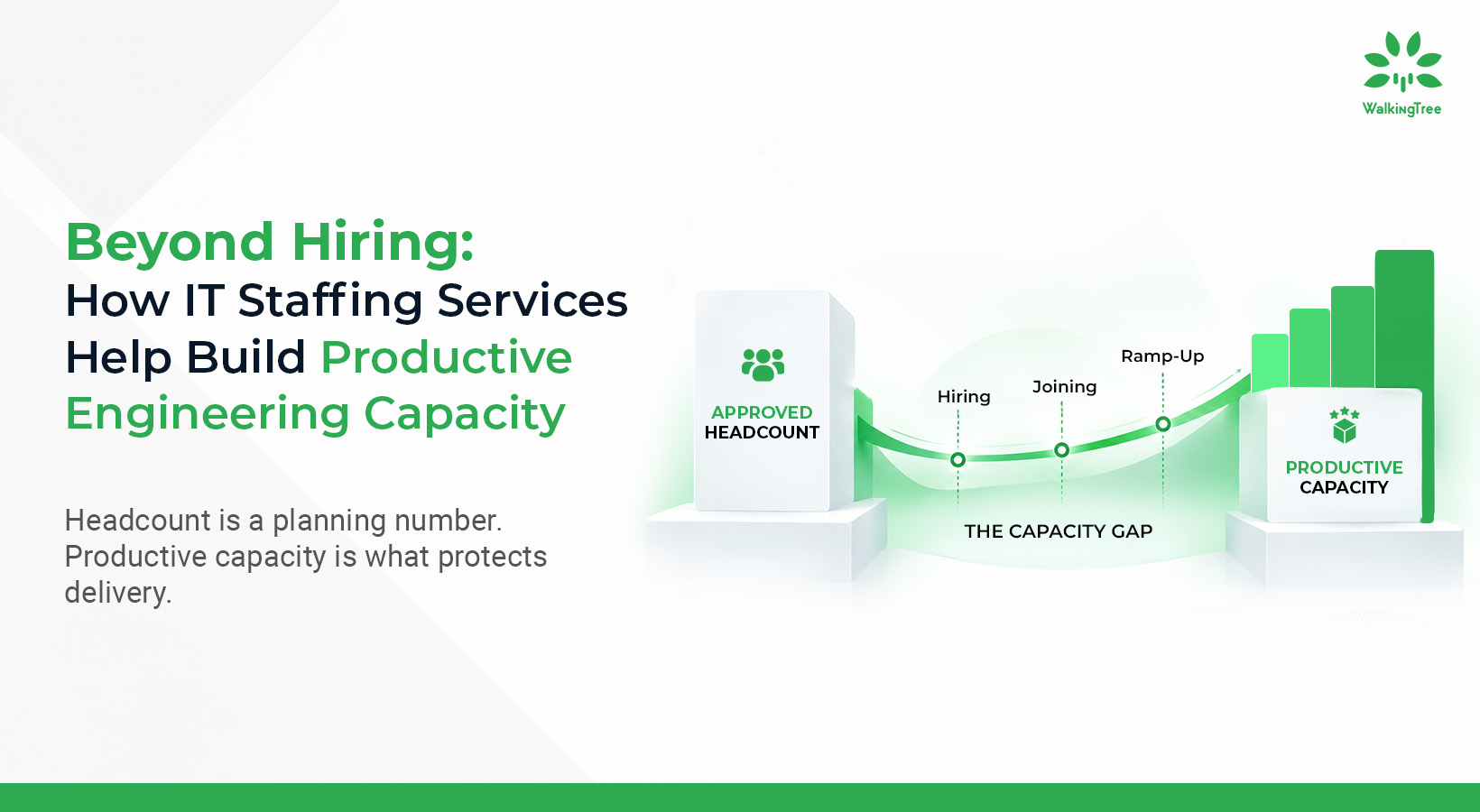
A VP of Engineering gets sign-off for six additional engineers ahead of a product release. On the workforce plan, capacity increases the moment the requisition is approved. On the ground, nothing has changed yet. Sourcing still has to find the right stack experience, each candidate still has to be validated, and the codebase still has to become familiar before anyone ships anything the release depends on.
That gap, between an approved role and a productive contributor, is where most delivery timelines quietly break. IT staffing services exist to close it, but only when built around validated capability rather than resume volume, and only once an organization stops treating headcount and capacity as the same number. Most IT staffing conversations still stop at placement, and buyers evaluating IT staffing options rarely ask what happens after the offer letter. This article looks at where that gap opens up and what it costs.
| Approved Headcount Isn’t Productive Capacity
Headcount is a planning number. Productive capacity is an operating reality, and the two rarely move together. An approved role sits on a spreadsheet. A productive contributor ships code against a sprint. Headcount planning tracks the first state. Almost nothing in a typical planning cycle tracks the rest.
McKinsey’s HR Monitor 2026 found that just 11% of organizations plan their workforce with a genuinely long-term, capability-first view; most planning still centers on counting approved roles rather than mapping what those roles need to deliver. Robert Half’s 2026 survey of technology leaders found that only 7% of technology organizations felt they had the talent needed to complete their priority projects. This is exactly the shortfall IT staffing was supposed to solve, and for most organizations it hasn’t.
A budget line for “two senior engineers” looks identical whether those people exist at a price you’re willing to pay, or don’t exist in your timeframe at all. Headcount planning answers how many roles are funded. It does not answer whether the work gets delivered, and that second question protects the release date. Good IT staffing services are built to answer it, not just staff the first, and that distinction separates useful IT staffing services from an ordinary IT staffing pipeline.
| Where Engineering Capacity Gets Lost
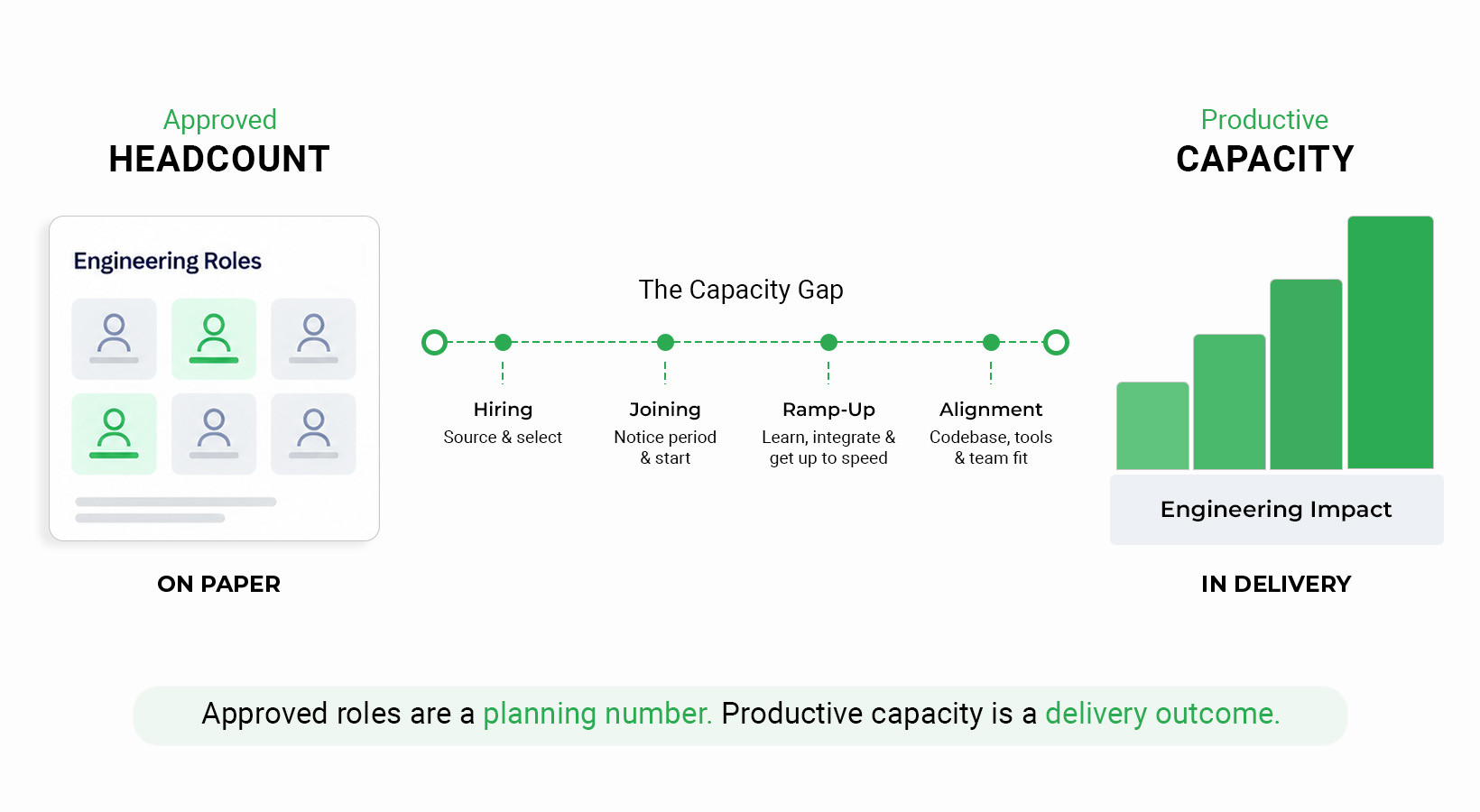
Between an approved role and a productive engineer sits a longer sequence than most plans account for, and each stage adds time before development capacity, not headcount, actually exists. Sourcing has to find someone with the right stack experience in a market where that experience is often scarce. Technical validation has to confirm the person can do the work, not just describe it in an interview. An accepted offer still has to survive a notice period, which in India regularly runs 30 to 90 days. Even after joining, someone needs devices, environments, and access provisioned before a single useful line of code gets written.
This is the sequence that separates development capacity from headcount. A role can be fully approved and fully budgeted and still contribute nothing to the sprint in front of you, because “approved” and “productive” describe two entirely different states. Protecting development capacity, not just headcount, is the actual job of workforce planning, and IT staffing services that ignore this sequence aren’t adding development capacity; they’re just adding headcount under a different label. Our own breakdown of where engineering hiring cycles typically stall walks through this friction stage by stage.
| The Delivery Cost of Waiting
Every stage in that sequence has a price, usually paid by the team already stretched thin. Ruzora’s research on engineering onboarding metrics found that strong, structured programs get new engineers to a first commit in two to three weeks and to full developer productivity in eight to twelve weeks, well inside the usual three-to-six-month range.
Developer productivity is not a soft metric here; it’s the entire point of approving the role in the first place, and IT staffing services that stop at placement never actually protect it. Developer onboarding shapes the ramp curve as much as the individual engineer does. Treated as a single day-one event rather than a managed period, developer onboarding rarely produces the ramp speed those numbers describe, and developer productivity measured from week one, not after a quarter, is the clearest signal of whether that ramp is actually working.
| When the Hiring Cycle Cannot Match the Roadmap
Not every capacity gap calls for the same response; this isn’t hiring being wrong and staffing being right. Full-time hiring makes sense when a need is durable and the organization can absorb a multi-month hiring and ramp cycle. Engineering staffing, in the form of staff augmentation, dedicated pods, or offshore delivery, makes sense when timelines are fixed, the skill is specialized, or the roadmap cannot wait for a hiring cycle that runs in months rather than weeks. Buyers who shop for IT staffing without knowing which situation they’re in often end up with the wrong model.
This is exactly the mismatch IT staffing services are supposed to close. Everest Group’s research on contingent talent and strategic staffing solutions frames this as the real value of the category: enterprises increasingly use specialist staffing to access validated capability faster than a full internal hiring cycle allows, not simply to cut cost. That framing only holds up if the staffing partner performs real technical validation before presentation.
| External Capacity Is Only Useful When It Can Contribute
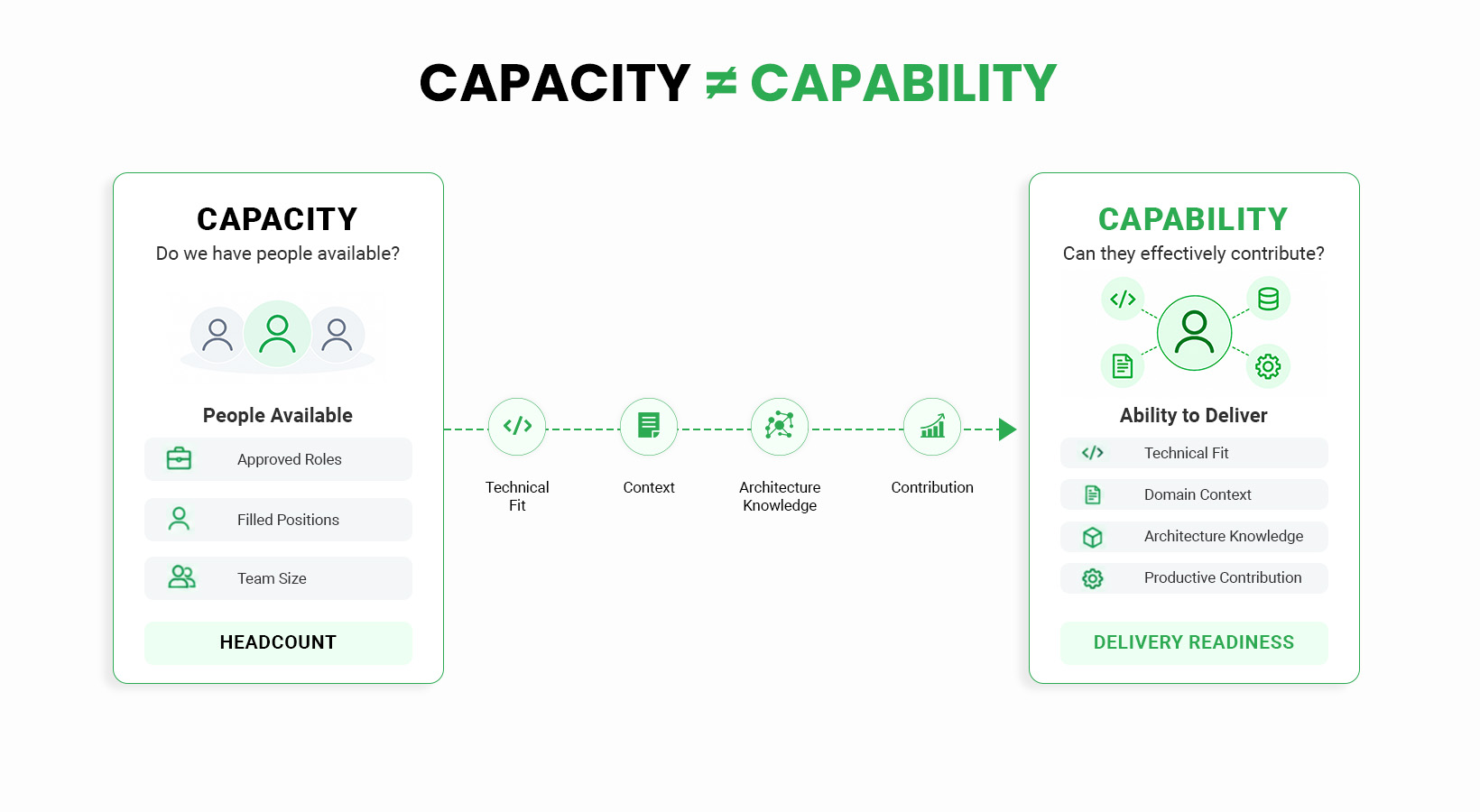
This is where IT staffing services earn their place or fail to. A staffing partner that hands over a resume and a start date has added headcount, not capacity. One that shortens the distance between “we need this skill” and “this person is producing verified, stack-aligned work” has actually solved the problem in front of it. That’s the standard IT staffing should be held to.
At WalkingTree, extended engineering teams are structured around more than role availability. The focus sits on technical fit, architecture alignment, structured onboarding, and delivery governance, so that additional capacity can contribute inside the existing engineering environment. Smart Recruit, WalkingTree’s technical assessment layer, is built into that process: role-calibrated evaluations before a candidate ever reaches a client interview, with a shortlist typically ready within 48 hours. That figure is a WalkingTree delivery metric, not an industry benchmark, and it exists because validation, not volume, is what shortens the road to productive capacity. IT staffing services succeed only when validation, not placement, is the deliverable.
If your roadmap is being slowed by exactly this gap between approved roles and available capacity, WalkingTree’s team can walk through where your specific bottlenecks sit. Get in touch to scope it out.
| Staff Augmentation, Pods, and Other Models Worth Knowing Apart
Engineering staffing covers more than one operating model, and picking the wrong one adds friction of its own. Staff augmentation embeds vetted engineers directly into a client’s existing team, useful when the skill gap is specific and the surrounding process and ownership are already in place. Dedicated engineering pods go further, assembling a cross-functional team around a product area the client can’t spare internal bandwidth to staff.
Offshore development centres and Build-Operate-Transfer arrangements solve a different problem: long-term, larger-scale delivery capacity rather than a single skill gap. Each model trades off setup time, ownership, and governance differently, and the right choice depends more on the shape of the work than on cost alone. Forcing a long-term gap into a short-term model just moves the friction elsewhere.
| Where Staffing Alone Doesn’t Close the Gap
None of this works if the staffing conversation stops at placement. A technically validated engineer dropped into a team with no onboarding plan and no clear ownership boundaries still isn’t productive capacity; they’re a well-qualified person waiting to become useful. Required skills keep shifting faster than most hiring processes can track, which is why validation has to be ongoing, not a one-time gate.
Staffing services close part of the gap: sourcing speed and technical validation. IT staffing alone was never going to fix a governance problem. Onboarding, architecture alignment, and delivery governance still have to happen on the client side, or be built into the engagement itself. IT staffing services that treat placement as the finish line guarantee this exact failure mode.
| From Available Talent to Productive Engineering Capability
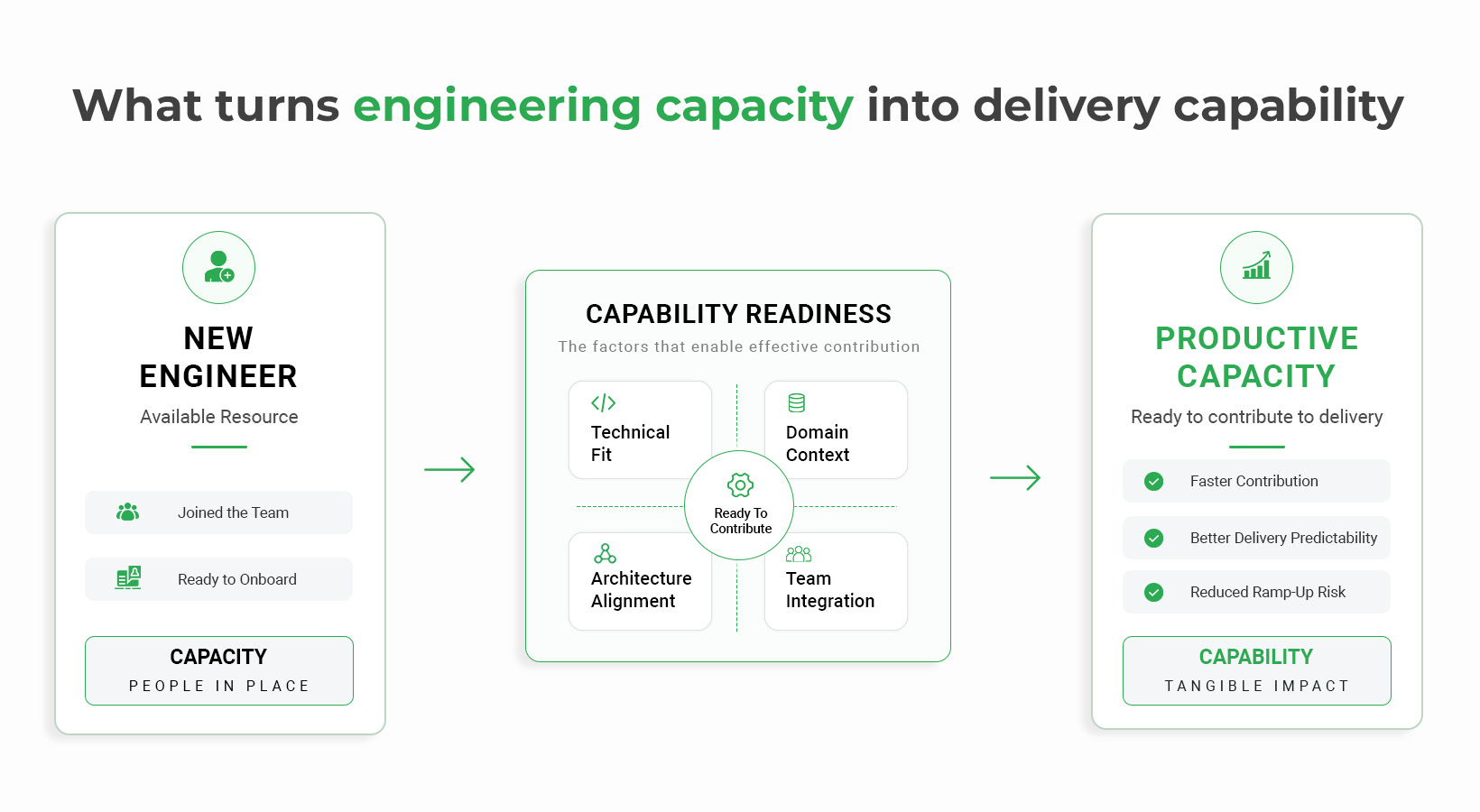
The question worth asking isn’t how many engineers got approved this quarter. It’s how much productive engineering capacity the organization needs, when it needs it, and how quickly that capacity can actually contribute. That framing answers the first question. It has never been able to answer the second.
IT staffing services are only as useful as the validation and structure behind them. Every conversation about IT staffing services should start from that harder question, not the easier one. Done well, they shrink the distance between an approved role and measurable developer productivity. Done poorly, they just move the same gap onto someone else’s desk.
If you’re mapping out where your own capacity gap actually sits, whether that means staff augmentation, a dedicated pod, or a longer-term offshore model, talk to WalkingTree’s team about scoping it.